What Is Infection Prevention
INFECTION PREVENTION
This chapter explains the importance of infection control at facilities, different components of infection control specific to facilities and how a mentor can actually apply the PDCA approach to set up or strengthen the infection prevention practices in a facility.

Introduction and need for infection prevention practices
Any person in the facility including its providers and clients along with their family members can be a source of infection. All objects that come in contact with any of them in the facility should be considered to be potentially infected and capable of transmission of infection. The most neglected service in a health care setting in India has poor infection control that lead to transmission of infections in the facility and community.

The objectives of infection prevention practices are:
- To provide services to clients with high quality and safety
- To prevent post-procedure infections in clients
- To prevent infections in service providers
- To prevent cross-infection in the community from health care facilities
Infection prevention is to mainly necessary to prevent the occurrence and minimize the risk of transmitting infections including blood-borne infections such as Hepatitis B, C and HIV to and from patients and staff in the health facility. Risk for infection is high when the clients and the staff are exposed to body fluids.

Components of Infection Control (Standard Universal Precautions)
A mentor should be aware of different components of infection control so that she can orient and encourage the facility staff to practice these effectively.
There are 6 components in infection prevention namely:
(1) Hand Hygiene
(2) Use of Personal Protective Equipment (PPE)
(3) Processing of instruments and other items
(4) Proper handling and disposal of sharps
(5) Maintain a clean environment
(6) Waste segregation and disposal
Hand Hygiene
The hands can get contaminated when performing various procedures. The correct technique of hand hygiene is important since microorganisms could be concentrated in the skin folds between fingers and around the thumb.
Practicing hand hygiene is one of the most important procedures to prevent cross-infection (infection spread from one person to another).

- Immediately after arriving at work
- Before and after examining each patient
- After contact with blood, secretions, excretions or articles that have been used for patients
- After handling specimens
- Before putting on and after removing gloves
- Before leaving work
Preparing for hand hygiene
- Remove jewellery (rings, bracelets) and watches before washing hands.
- See that the nails are clipped short.
- Roll the sleeves up to the elbow.

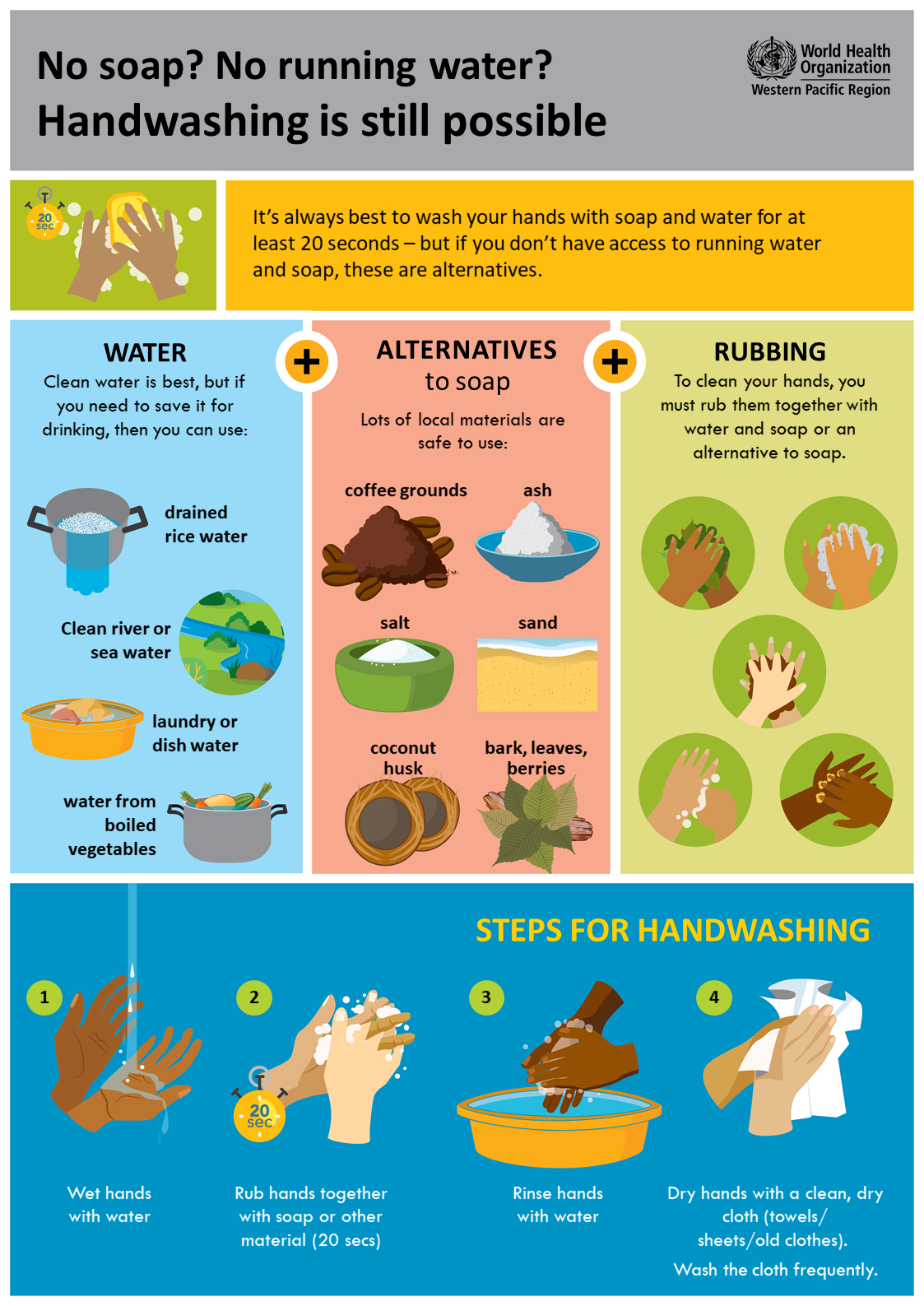
- Wet the hands and wrists, keeping hands and wrists lower than the elbows (permit the water to flow to the fingertips, avoiding arm contamination)
- Apply soap and lather thoroughly
- Use firm, circular motions to wash the hands and arms up to the wrists.
- Cover all areas including palms, back of the hands, fingers, between fingers and lateral side of the fifth finger, knuckles, thumbs, nails and wrists (see Figure 8)
- Rub for minimum of 10-15 seconds
- Repeat the process if the hands are very soiled
- Rinse hands thoroughly, keeping the hands lower than the fore arms
- Dry hands thoroughly with disposable paper towel or napkins, clean dry towel, or air-dry them
- Discard the towel used, in an appropriate container without touching the bin lids with hand
- Use a paper towel, clean towel or your elbow / foot to turn off the tap to prevent contamination

- Collect water in a bucket daily
- Ask someone for help to pour water on your hands using a mug
- Follow the same steps as given.
- Collect used water in a basin and discard in a sink, drain or toilet
- DO NOT dip your hands in to the bucket as this will contaminate the water.
- DO NOT keep a basin with a disinfectant solution in the ward to use for cleaning hands. This will not disinfect the hands. It will only contaminate them further.
Use of Personal Protective Equipment (PPE)
PPE is designed to protect the skin and the mucous membranes of the eyes, nose, and mouth of healthcare providers from exposure to blood or other potentially infectious material (amniotic fluid, vaginal secretions, urine, stool etc.).
This includes the use of gloves, mask, apron or gown, goggles, footwear etc. The use of these will depend on what the chance of contact with infectious body fluids would be. If the risk is very high then all PPE must be used (see Table 10).


How to wear surgical gloves

How to remove gloves see fegure below


Comments
Post a Comment